
TRAILER TYPES
Freight Trailer Types & Equipment Options
Riteway Transports coordinates a wide range of trailer and equipment options to match different freight sizes, dimensions, loading requirements, and transportation needs.
CHOOSING THE RIGHT EQUIPMENT
Match the Trailer to the Freight
The right trailer depends on the size, weight, dimensions, loading method, and handling requirements of your freight. Riteway Transports helps coordinate equipment that fits the shipment, from standard dry vans and flatbeds to specialized trailers for oversized and complex loads.
WHAT DETERMINES TRAILER TYPE
Key Factors for Equipment Selection
- Freight dimensions
- Total shipment weight
- Loading and unloading method
- Commodity and freight type
- Weather protection requirements
- Oversize or specialized handling needs
TRAILER & EQUIPMENT OPTIONS
Equipment for Standard & Specialized Freight
Flatbed Trailer

Flatbed trailers provide open-deck access from the sides and rear, making them a versatile option for machinery, building materials, and equipment. Additionally, they work well for freight that may not fit inside an enclosed trailer.
- Typical deck length: 48–53 ft
- Typical deck width: 8 ft 6 in
- Typical freight capacity: Up to approximately 48,000 lbs, depending on the equipment and load
Lowboy Trailer

Lowboy trailers have a lowered deck that provides additional vertical clearance for tall machinery and heavy equipment. Therefore, they are commonly used for construction equipment, industrial machinery, and other freight that is too tall for a standard flatbed.
- Typical well length: Approximately 24–29 ft
- Typical well height: Approximately 18–24 in
- Capacity: Varies significantly by axle configuration and equipment
Step Deck Trailer

Step deck trailers have an upper and lower deck, allowing taller freight to sit lower than it would on a standard flatbed. They are commonly used for machinery, equipment, building materials, and other freight requiring additional vertical clearance.
- Typical overall length: 48–53 ft
- Typical lower deck height: Approximately 36–42 in
- Typical freight capacity: Up to approximately 48,000 lbs, depending on the equipment and load
Stretch Flatbed Trailer

Stretch flatbed trailers have an extendable deck designed for freight that is too long for a standard flatbed. They are commonly used for long structural components, beams, fabricated materials, machinery, and other oversized freight.
- Deck length: Extends beyond a standard 48–53 ft flatbed
- Deck width: Typically 8 ft 6 in
- Capacity: Varies by trailer configuration, extended length, and load
Stretch Single-Drop Deck

Stretch single-drop trailers combine the lower deck of a step deck with an extendable main deck, making them useful for freight that is both tall and unusually long. They are commonly used for structural components, machinery, fabricated materials, and other long oversized loads.
- Main deck length: Approximately 35–63 ft when extended
- Deck width: Typically 8 ft 6 in
- Typical freight capacity: Up to approximately 45,000 lbs, depending on configuration and load
Stretch Double-Drop

Stretch double-drop trailers provide a low center well for taller freight while also offering additional length for oversized loads. This configuration is commonly used for large machinery, industrial equipment, and freight requiring both extra vertical clearance and an extended deck.
- Typical well length: Approximately 25–29 ft before extension
- Deck width: Typically 8 ft 6 in
- Capacity: Varies by trailer length, axle configuration, and load
Extendable Double Drop

Extendable double-drop trailers combine a low center well with an extendable deck, making them useful for freight that is both unusually tall and long. They are commonly used for large machinery, structural components, industrial equipment, and other oversized loads.
- Main deck length: Approximately 29–50 ft when extended
- Deck width: Typically 8 ft 6 in
- Capacity: Varies by trailer configuration, axle setup, and load requirements
Removable Gooseneck (RGN)

RGN trailers feature a detachable front section that allows the trailer deck to be lowered to the ground, creating a ramp for loading heavy machinery and equipment. They are commonly used for excavators, dozers, cranes, industrial equipment, and other heavy or oversized freight.
- Typical well length: Approximately 24–29 ft
- Low deck height: Designed for increased vertical clearance
- Capacity: Varies widely by axle configuration, trailer setup, and permit requirements
Stretch RGN

Stretch RGN trailers combine the loading advantages of a removable gooseneck with an extendable main deck. They are used for freight that is both heavy and unusually long, including large machinery, industrial components, and oversized equipment.
- Main deck length: Approximately 29–65 ft when extended
- Deck width: Typically 8 ft 6 in
- Capacity: Varies widely by axle configuration, trailer setup, and load requirements
Dry Van Trailer
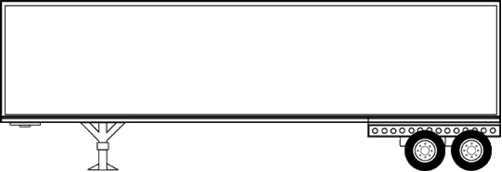
Dry van trailers provide an enclosed cargo area that protects freight from weather and road exposure. They are commonly used for palletized goods, packaged products, manufactured items, and other freight that can be loaded through the rear doors.
- Typical trailer length: 48–53 ft
- Typical interior width: Approximately 8 ft 2 in
- Typical freight capacity: Approximately 42,000–45,000 lbs, depending on equipment and load
Refrigerated Trailer
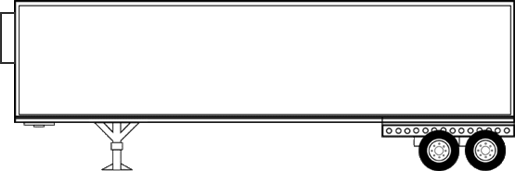
Refrigerated trailers are enclosed, temperature-controlled trailers used for freight that needs protection from heat or cold during transit. They are commonly used for chilled, frozen, and other temperature-sensitive products.
- Typical trailer length: 48–53 ft
- Typical interior width: Approximately 8 ft 2 in
- Typical freight capacity: Approximately 42,000–45,000 lbs, depending on equipment and load
Conestoga Trailer
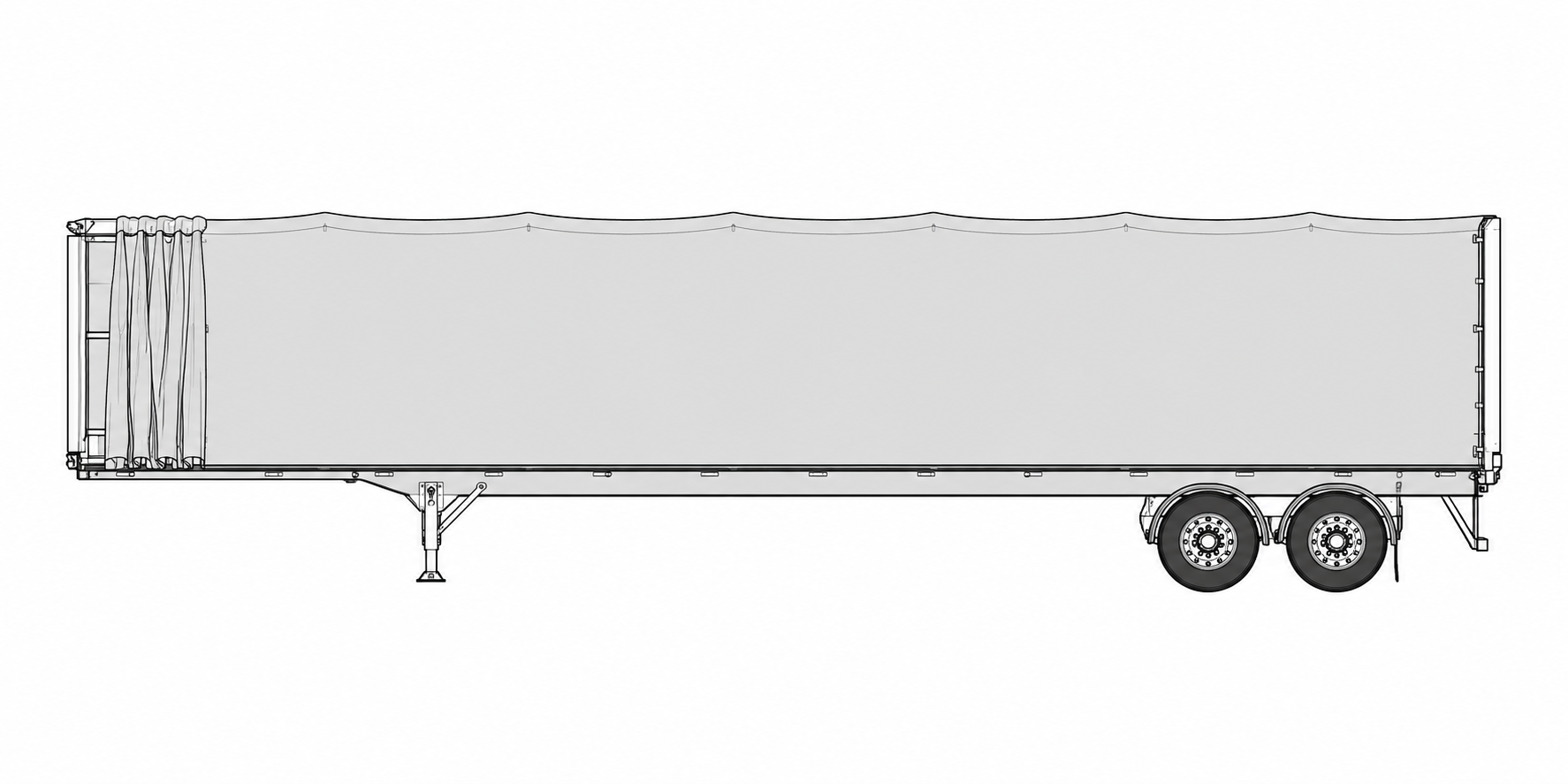
Conestoga trailers use a retractable rolling tarp system that provides the loading flexibility of a flatbed while offering enclosed protection for the freight. They are useful for machinery, fabricated products, and other loads that benefit from side or overhead loading.
- Typical trailer length: 48–53 ft
- Typical deck width: Approximately 8 ft 2 in
- Typical freight capacity: Approximately 42,000–45,000 lbs, depending on equipment and load
Side Kit Trailer
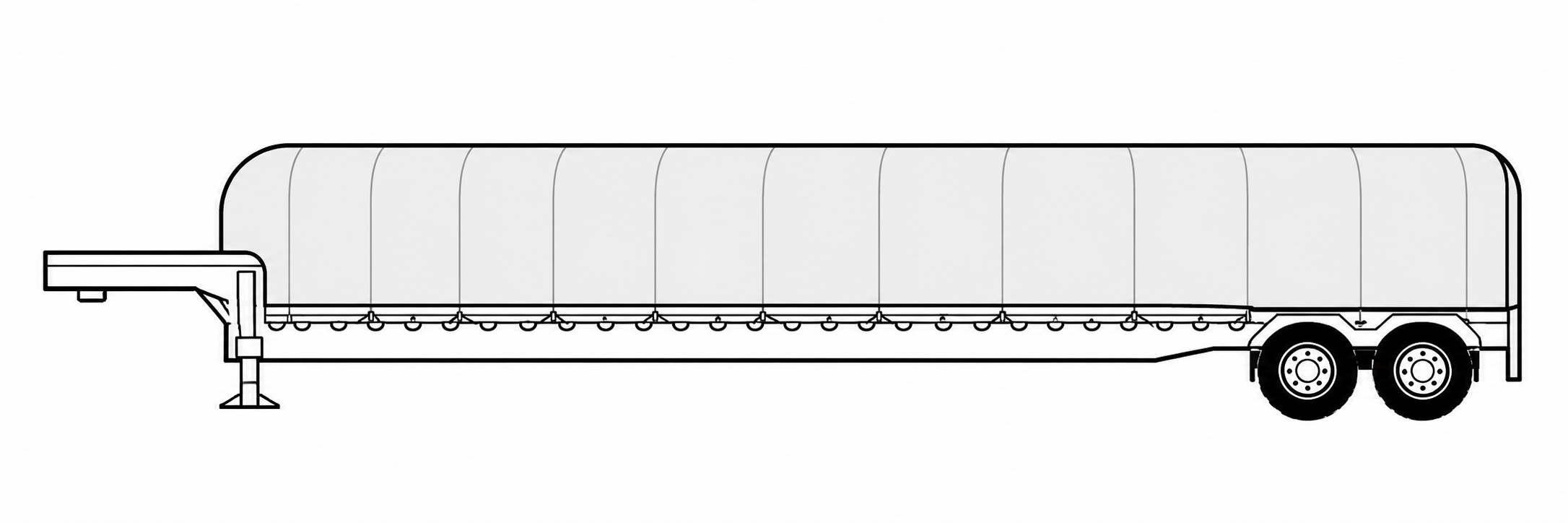
Side kit trailers use removable side panels with a tarp system to provide additional protection for freight while retaining much of the loading flexibility of a flatbed. They are commonly used for materials and products that benefit from side loading and weather protection.
- Typical trailer length: 48–53 ft
- Typical width: Approximately 8 ft 4 in
- Typical freight capacity: Approximately 42,000–45,000 lbs, depending on equipment and load
Power Only
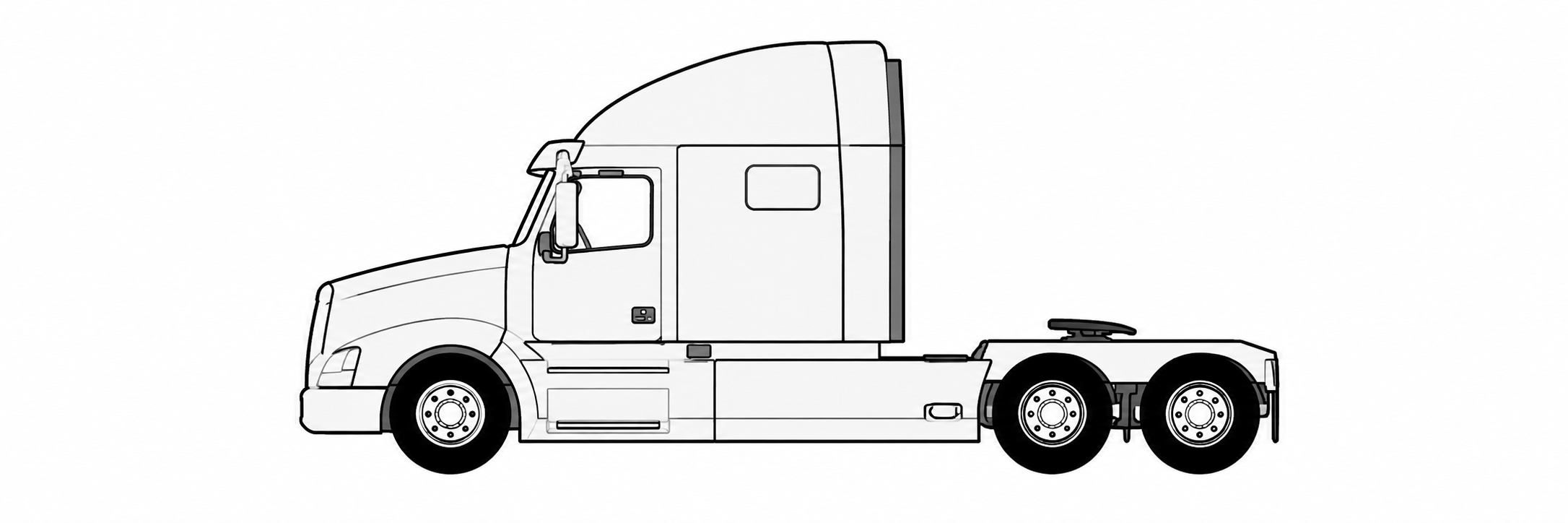
Power-only service provides a tractor to move a customer-owned or third-party trailer. It can be used for loaded or empty trailers and is useful when the trailer is already available but a tractor and driver are needed to complete the move.
- Trailer: Supplied by the customer or another party
- Connection: Compatible tractor and trailer connection required
- Capacity & dimensions: Depend on the trailer being transported and applicable regulations
Specialized Trailers
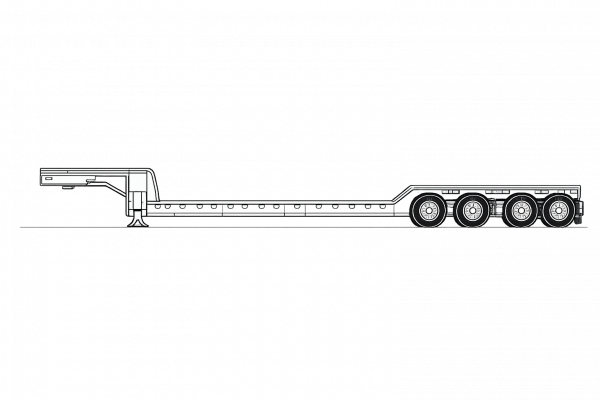
Specialized trailer configurations are used for exceptionally large, heavy, or complex freight that cannot be handled with standard equipment. Depending on the load, these moves may use perimeter trailers, double-gooseneck configurations, dollies, multi-axle systems, or other purpose-built equipment.
- Best suited for: Extremely heavy, oversized, or complex freight
- Equipment configuration: Selected according to the specific dimensions, weight, and loading requirements
- Capacity: Can exceed standard heavy-haul capacities and varies significantly by trailer configuration, axle setup, route, and permit requirements